What an 88–93+ Coffee Score Actually Means: Coffee Score Breakdown and Rarity
In specialty coffee, cupping scores are not marketing language—they are technical evaluations rooted in internationally recognized standards. When a coffee scores 88–93+, it occupies a narrow, elite tier that only a small percentage of specialty coffee worldwide ever reaches.
Understanding what that number represents requires understanding how coffees are evaluated, what attributes are scored, and why each point above 87 becomes exponentially harder to achieve.
What Is a Coffee Cupping Score?
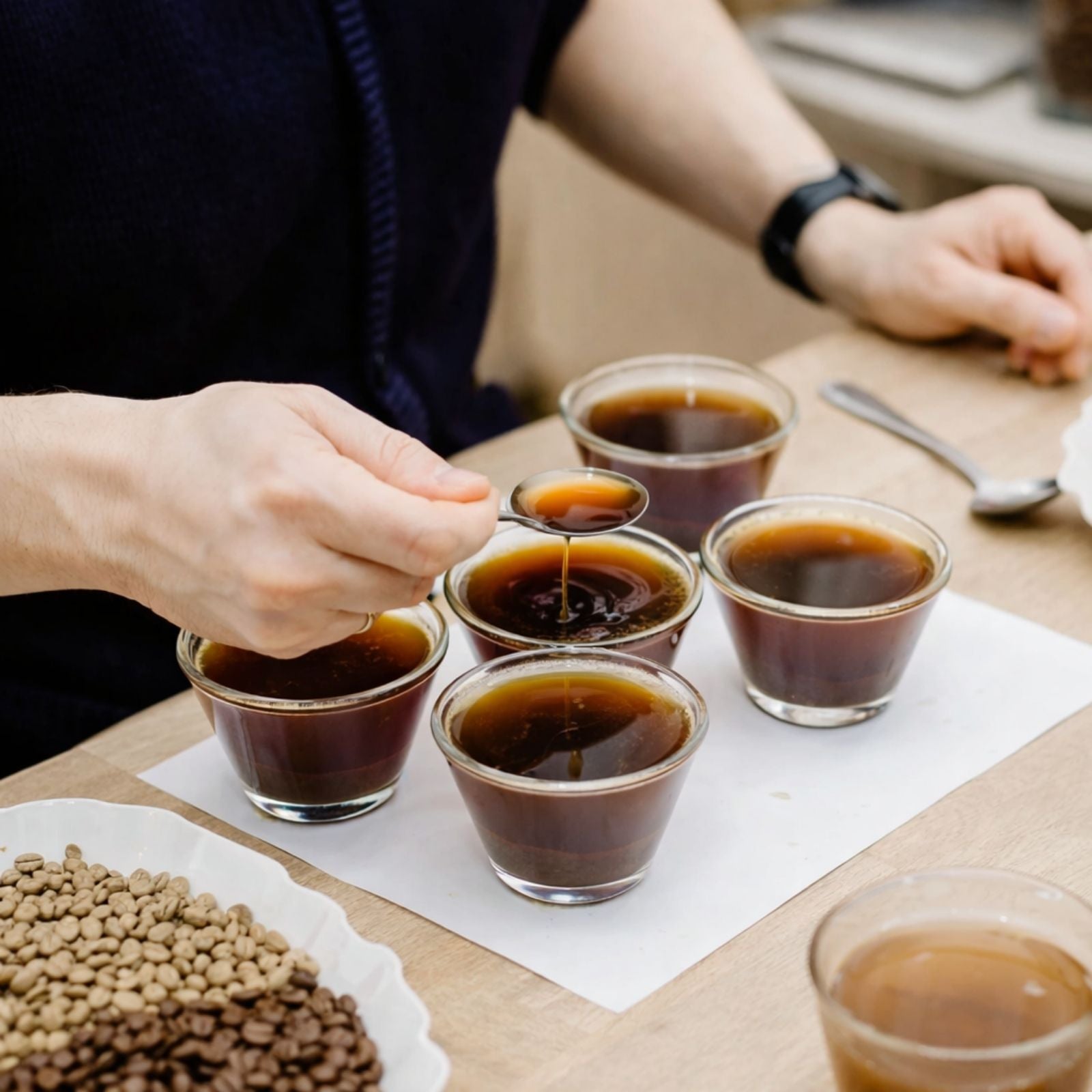
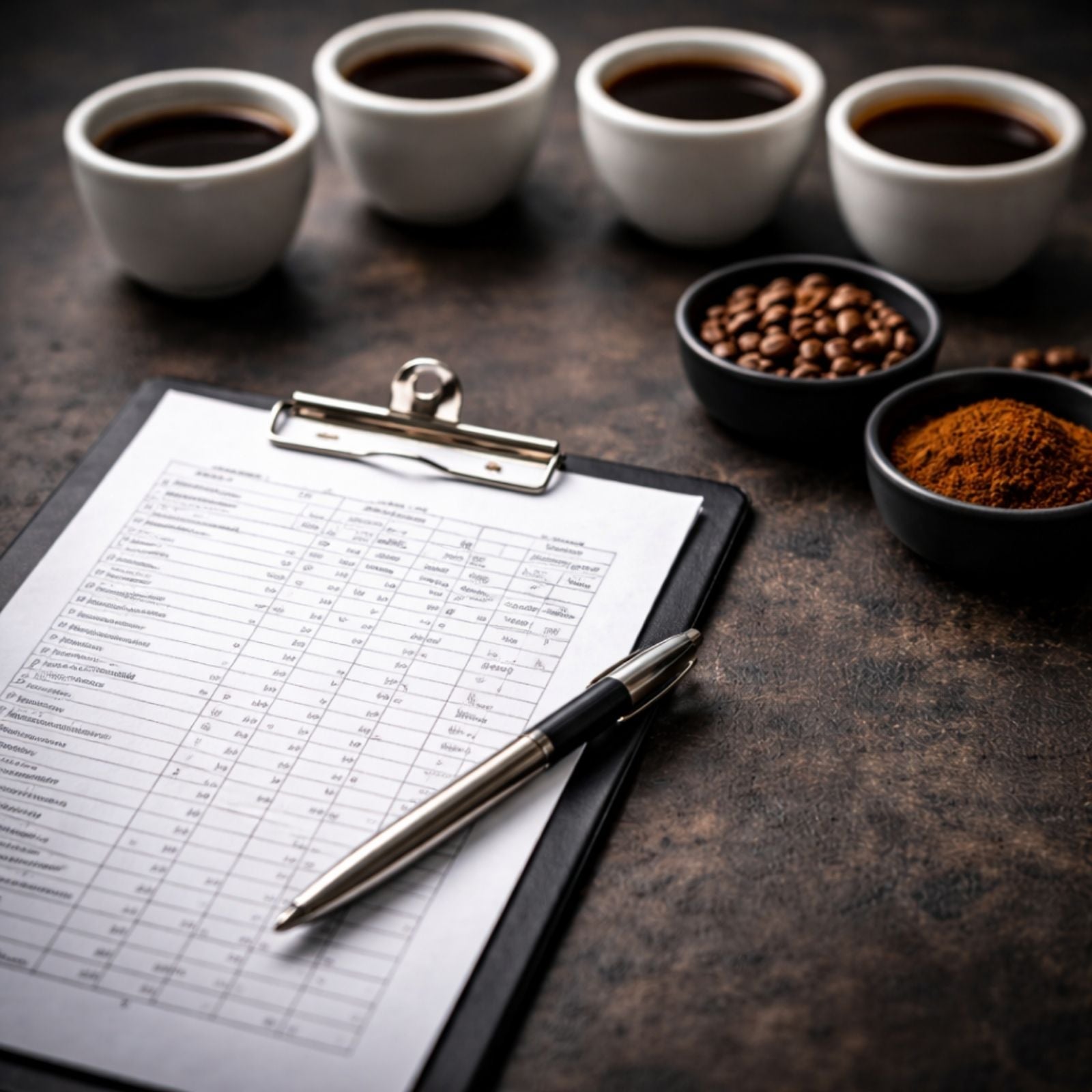
Coffee cupping scores are determined using standardized protocols established by the Specialty Coffee Association (SCA). These protocols are used globally by producers, exporters, importers, roasters, Q Graders, and competition judges to evaluate coffee quality consistently across origins.
Each coffee is brewed under controlled conditions and evaluated blind. The final score reflects measurable sensory quality, not preference or roast style.
Coffee Scoring Scale (SCA Classification)
According to SCA guidelines, coffees are broadly categorized as follows:
- Below 80.0 — Commercial
- 80.0–84.9 — Very Good
- 85.0–89.9 — Excellent
- 90.0–100 — Outstanding
Only a small percentage of specialty coffee worldwide scores 88 and above.
Within the “Excellent” category, scores 88 and above are considered exceptional selections, often approaching competition-grade quality. Coffees scoring 90+ are extremely rare and typically produced in limited volumes.
How Rare Is an 88–93+ Coffee?
- The majority of specialty coffee scores between 82 and 86
- Coffees scoring 88–89.9 represent a small fraction of total specialty output
- Coffees scoring 90+ are often:
- Micro-lots or exceptional cooperative selections
- Entered into national or international competitions
- Pre-sold to high-end roasters before public release
Many farms and cooperatives produce no coffees 88 and above in an entire harvest year.
What Is Exactly Being Scored? (SCA Attribute Breakdown)
SCA cupping evaluates coffee across 10 primary sensory attributes, each scored individually and combined into a final numeric score. This breakdown is critical, because a high score is not achieved by one impressive characteristic—it requires excellence across the entire cup.
Fragrance / Aroma
Evaluated both dry and wet. High-scoring coffees show clean, expressive aromatics with clear identity (floral, fruit, sugar, spice) and no dullness or off-notes.
Flavor
The combined impression of taste and aroma while the coffee is in the mouth. Coffees scoring 88+ demonstrate clarity, precision, and definition, rather than generic “coffee” flavor.
Aftertaste
The persistence and quality of flavors after swallowing. In high-scoring coffees, the finish is long, clean, and pleasant, with no bitterness or astringency.
Acidity (Quality)
This measures structure and brightness, not sourness. In 88–93+ coffees, acidity is vibrant, refined, and integrated, often described as citrus, stone fruit, or malic rather than sharp.
Body
The tactile sensation or weight of the coffee. High-scoring coffees show smooth, refined texture—never heavy or thin for its origin.
Balance
How well all attributes work together. Even exceptional acidity or sweetness cannot compensate for imbalance. Coffees above 88 show cohesion across all elements.
Sweetness
Natural sweetness derived from the coffee itself, not roast development. Absence of harshness and presence of sugar-like qualities are essential.
Uniformity
Consistency across multiple cups. Any deviation lowers the score.
Clean Cup
Absence of negative flavors from defects or processing faults. This category is critical at high levels—even one minor defect can disqualify a coffee from scoring above 87.
Overall
The evaluator’s holistic assessment of quality, reflecting distinction and character.
How a Coffee Reaches 88–93+
A final cupping score is not a single judgment—it is the sum of how well the coffee performs across every attribute. Coffees in the 88–93+ range typically exhibit:
- Exceptional raw material quality
- Zero primary defects, and minimum or zero secondary defects
- High uniformity and consistency
- Precision processing and drying
- Careful storage and handling
- Restraint in roasting to preserve inherent character
A single flaw in any category can lower the score by a full point or more.
Sensory Profile: What 88–93+ Coffees Tend to Share
While origin and processing influence flavor, coffees in this tier often display:
- Clearly articulated flavor notes rather than generalized taste
- High natural sweetness
- Structured, lively acidity
- Smooth, refined mouthfeel
- Clean transitions from hot to cool
- A long, elegant finish
These coffees do not rely on roast intensity or additives to create impact—their quality is intrinsic.
The Role of Defects in High-Level Scoring
Defect presence is one of the most decisive factors in preventing a coffee from reaching 88+.
Primary and secondary defects such as:
- Black beans
- Sour beans
- Insect damage
- Fermentation faults
can suppress sweetness, flatten acidity, and shorten the finish—even if present in small numbers.
This is why coffees scoring 88–93+ are often:
- Strictly graded at origin
- Hand-sorted before roasting
- Re-sorted after roasting
Clean cup and uniformity are non-negotiable at this level.
Can Roasting Increase a Coffee’s Score?
Roasting cannot increase inherent quality—it can only preserve or diminish it.
A skilled roast highlights clarity and balance. An aggressive or careless roast can obscure nuance or introduce bitterness, reducing the effective sensory score in the cup.
High-scoring coffees demand restraint and precision to maintain their evaluated quality.
Why the 88–93+ Range Matters
Coffees in this range sit at the intersection of:
- Agricultural excellence
- Disciplined processing
- Strict grading standards
- Meticulous handling
- Skilled, respectful roasting
They are unforgiving, limited, and difficult to replace—but when executed properly, they offer a level of clarity and refinement that defines ultra-premium specialty coffee.
Final Perspective
An 88–93+ cupping score is not a marketing flourish. It is a documented evaluation reflecting rare quality achieved across every sensory dimension.
Once you become familiar with coffees in this tier, the difference is unmistakable—and returning to lower-quality coffee becomes increasingly difficult.
Cupping scores are part of specialty coffee classification, and Farm Gate certification does not guarantee high scores.