What “Specialty Coffee” Really Means: Standards, Scores, and the Reality Behind the Label

The term “specialty coffee” is widely used across cafés, roasters, and online shops, yet it is often misunderstood. This article explains what specialty coffee actually means, how it is defined within the coffee industry, what standards are used to classify it, what is not regulated by law, and how those standards are applied in real-world practice. It also explains how Burnett Coffee Roasters approaches specialty coffee beyond minimum industry requirements.
What Is Specialty Coffee?
Specialty coffee is a quality classification of green (unroasted) coffee, not a legal or government-regulated label. The modern definition originates from the Specialty Coffee Association (SCA), which establishes widely adopted industry standards for evaluating coffee quality. These standards focus on green coffee defect limits and sensory evaluation using a 100-point cupping scale.
To qualify as specialty under SCA standards, a coffee must meet two primary criteria:
- Score 80 points or higher on a standardized cupping form
- Meet strict defect-count thresholds in a 350-gram green coffee sample
These standards are voluntary industry benchmarks and are not laws.
Specialty Coffee Is Not Regulated by Law
There is no government agency in the United States or internationally that legally regulates the use of the term “specialty coffee.” No law requires a roaster to prove that a coffee is specialty, to re-inspect green coffee after purchase, or to verify defect counts at the retail level.
Government agencies such as the Federal Trade Commission only intervene if claims are materially deceptive. Because the coffee industry broadly accepts lot-level grading performed upstream by producers, exporters, or importers, a roaster may legally label coffee as specialty even if the roaster does not inspect for defects, cup every batch, or verify consistency from bag to bag. In practice, accountability comes from industry norms, buyer expectations, and reputation rather than legal enforcement.
Green Coffee Defect Standards

Specialty classification is determined using a 350-gram sample of green coffee evaluated before roasting according to SCA green coffee grading protocols.
Primary Defects (Category 1)
Primary defects are severe defects that significantly degrade cup quality. Examples include:
- Full black beans
- Full sour beans
- Fungal damage
- Foreign matter such as stones, wood, or metal
To qualify as specialty, a coffee must contain zero primary defects per 350-gram sample.
Secondary Defects (Category 2)
Secondary defects are less severe but still negatively affect flavor clarity. Examples include:
- Partial black or partial sour beans
- Insect damage
- Broken or chipped beans
- Shells
- Immature or shriveled beans
Specialty coffee may contain no more than five secondary defects per 350-gram sample.
If a coffee exceeds either of these limits, it does not qualify as specialty under SCA green coffee standards.
Why Defects Still Appear in “Specialty” Coffee
Even when a coffee is legitimately graded as specialty, defects are not evenly distributed throughout a lot. One retail bag may contain no visible defects, while another bag from the same roast may contain several. This occurs because grading is performed on a representative sample rather than on every bag, and most roasters do not manually sort green coffee prior to roasting.
Roasting does not remove defects and can sometimes mask or amplify their negative impact on flavor. As a result, most specialty coffee sold today qualifies as specialty by average rather than by individual bag verification.
Cupping Scores Explained
Cupping evaluates coffee using standardized SCA protocols that assess multiple sensory attributes. For clarity, Burnett Coffee Roasters presents these attributes in a refined format that reflects how they are perceived in the cup while remaining aligned with SCA methodology.
- Sensory attributes evaluated include:
- Fragrance (dry aroma)
- Wet aroma
- Flavor
- Brightness (perceived acidity)
- Body
- Sweetness
- Clean cup
- Uniformity
- Finish (aftertaste)
- Complexity
Scores are recorded on a 100-point scale and grouped into recognized quality tiers:
- 80.00–84.99: Very Good
- 85.00–89.99: Excellent
- 90.00–100: Outstanding
Any coffee scoring 80 points or higher qualifies as specialty. Coffees scoring at 88 points and higher are considered exceptionally high quality and are typically associated with limited microlots, high-elevation farms, and competition-level preparation.
Who Performs Cupping and Grading
Cupping and grading may be performed by producers, exporters, importers, or licensed Q-Graders. A Q-Grader is certified by the Coffee Quality Institute and is trained, calibrated, and tested to evaluate coffee consistently using SCA standards. Q-grading is widely respected within the industry but remains voluntary and is not legally required.
The Gap Between Standards and Retail Reality
Specialty standards apply to green coffee at the time of grading, not to every roasted bag sold to consumers. Most roasters rely on importer grading, do not re-grade green coffee upon arrival, do not inspect every roast batch, and do not hand-sort defects prior to roasting. This reflects how the specialty coffee industry operates at scale rather than intentional misrepresentation.
How Burnett Coffee Roasters Goes Further
Burnett Coffee Roasters treats specialty coffee as a baseline rather than a finish line.
Burnett Coffee Roasters standards include:
- All coffees start at 88 points or higher
- Coffees are Q-graded by a licensed Q-Grader
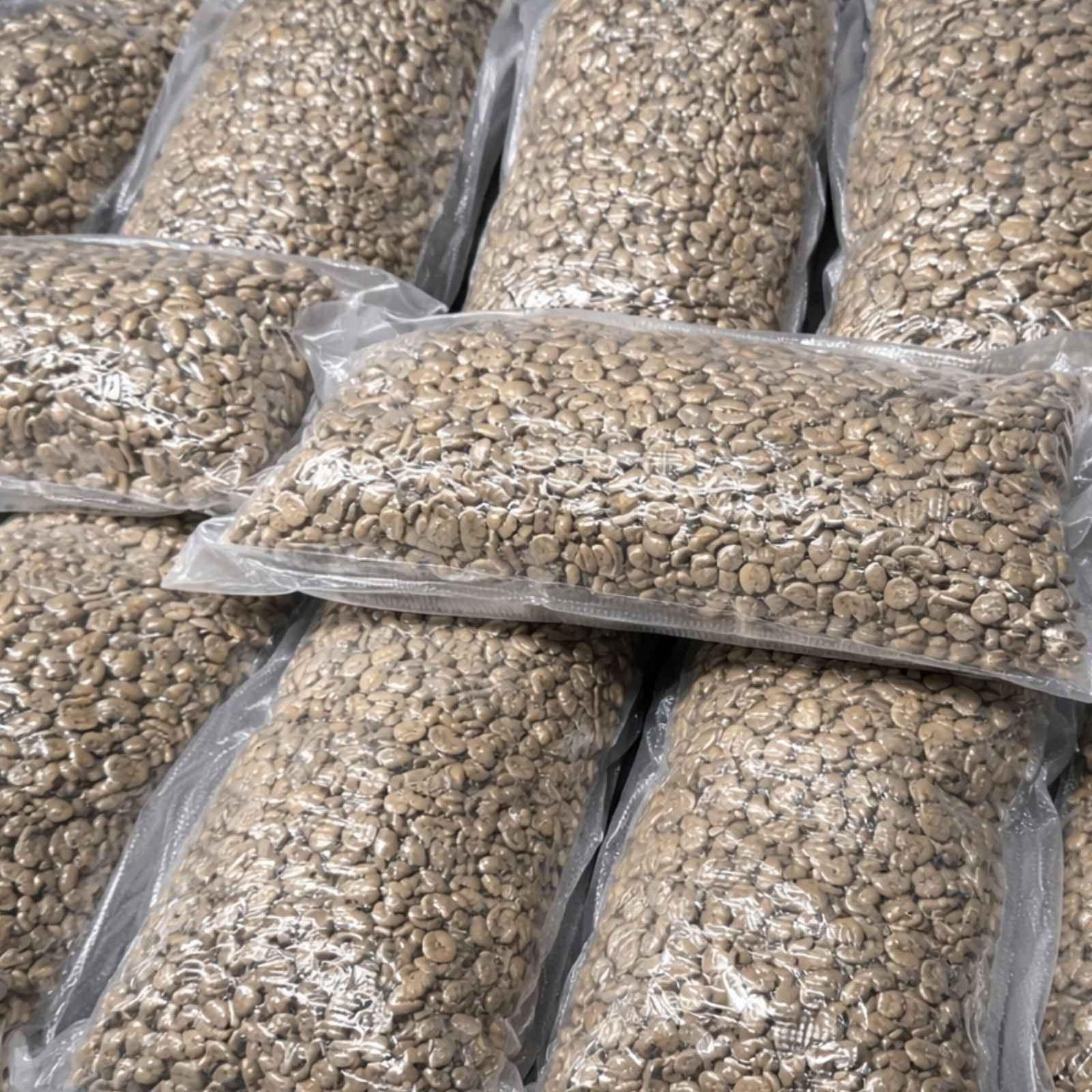
- Upon arrival, green coffee is pre-portioned by bag and double vacuum sealed to minimize oxygen exposure and preserve freshness, stability, and cup integrity until roasting
- All green coffee is hand sorted prior to roasting
- Every bag is inspected individually
- All primary and secondary defects are removed
No assumptions are made based on averages, and no reliance is placed solely on upstream paperwork. Each bag is individually prepared to preserve clarity, sweetness, acidity, and balance in the cup. This level of preparation aligns more closely with competition-level standards than typical retail specialty coffee production.
Why This Matters
When consumers see the term “specialty coffee,” it is often assumed to mean flawless beans, consistent quality, and verified excellence. In reality, specialty coffee is a starting classification rather than a guarantee of defect-free coffee at the retail level. Understanding how specialty standards work allows consumers to recognize when additional care and labor are applied beyond minimum industry requirements.
Final Thoughts
Specialty coffee is defined by industry standards, not by law. Those standards establish an important foundation, but how they are applied matters. Burnett Coffee Roasters prioritizes transparency by explaining not only what specialty coffee is, but how it is evaluated and where industry practices vary. Excellence should not be assumed. It should be verified, one bag at a time.
Specialty coffee is defined by cupping scores, but also depends heavily on post-harvest processing and quality control.