Auto Drip Brewing Guide: How to Brew a Clean, Consistent Cup
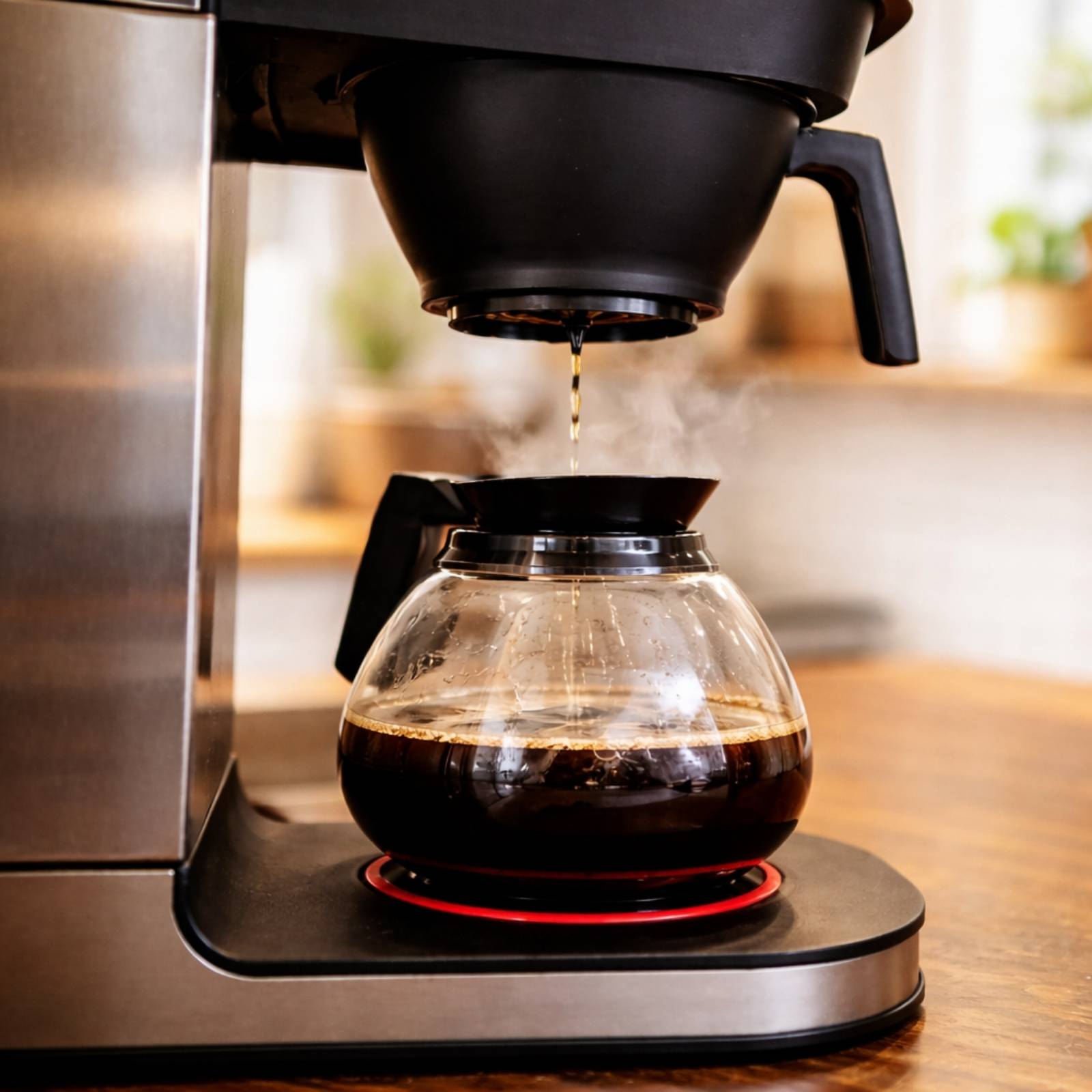
Auto Drip is one of the most widely used brewing methods because of the convenience and consistency. When properly dialed in, it produces a clean, balanced cup that highlights sweetness and smoothness without requiring hands-on brewing.
While often treated as a “set it and forget it” method, drip brewers still rely heavily on correct grind size, ratio, water quality, and temperature. Small adjustments can dramatically improve cup quality.
What Makes Auto Drip Unique
Unlike immersion brewers, drip machines extract coffee by continuously passing hot water through a bed of grounds. This means:
- Extraction happens gradually as water flows through the coffee
- Brew time is controlled by machine design and grind size
- Paper filters remove sediment and excess oils
The result is a familiar, approachable cup that emphasizes balance and drinkability.
Recommended Grind Size
Grind: Medium
A medium grind allows water to flow evenly through the coffee bed at the correct speed.
Grinding too fine can cause over-extraction and bitterness, while grinding too coarse may result in weak or sour coffee.
Consistency matters more than grind labels. A uniform medium grind produces the most reliable results.
Coffee-to-Water Ratio (8 oz Reference)
This guide uses 8 fl oz (240 ml) as the standard reference size.
- Coffee: 14–18 g
- Water: 240 ml (8 fl oz)
- Ratio: Approximately 1:13 to 1:17
Lower ratios increase strength and body. Higher ratios emphasize clarity and smoothness.
How to Brew
- Place a paper filter in the brewer basket.
- Rinse the filter thoroughly with hot water and discard the rinse water.
- Add 14–18 g of freshly ground coffee to the filter.
- Fill the water reservoir with 240 ml of filtered water.
- Start the brewer and allow the cycle to complete fully.
- Remove the carafe promptly once brewing is finished.
Avoid letting brewed coffee sit on a hot plate for extended periods.
Brew Time and Temperature
- Water temperature: 195–205°F (90–96°C)
- Total brew time: About 4–6 minutes, depending on machine
Machines that brew too hot or too slowly often produce bitterness.
Scaling the Recipe
Auto Drip scales linearly.
To brew larger or smaller amounts, maintain the same ratio:
- 12 oz (360 ml): 22–24 g coffee
- 16 oz (480 ml): 30–32 g coffee
When brewing larger volumes, ensure the coffee bed remains evenly saturated.
Common Mistakes to Avoid
- Using stale or pre-ground coffee
- Skipping filter rinsing, introducing paper taste
- Allowing coffee to sit on a hot plate too long
Using poor-quality or heavily chlorinated water
Small corrections dramatically improve results.
How to Adjust Flavor
If the coffee tastes sour or weak:
- Grind slightly finer
- Increase coffee dose
If the coffee tastes bitter or harsh:
- Grind slightly coarser
- Reduce brew time if possible
- Remove coffee from heat immediately after brewing
Always adjust one variable at a time.
Taste Profile
A well-brewed auto drip cup is:
- Clean and balanced
- Smooth with moderate body
- Sweet with restrained acidity
- Easy to drink and consistent
It expresses coffee in a straightforward, accessible way.
The Bottom Line
Auto Drip is capable of producing excellent coffee when properly dialed in. By using a medium grind, correct ratios, clean water, and timely removal from heat, auto drip delivers a reliable, balanced cup suitable for everyday drinking.
Mastering auto drip is less about equipment and more about fundamentals.
If you’re curious how manual brewing compares to automatic drip coffee, explore the Kalita Wave brewing method.