Espresso Brewing Guide: How to Pull a Balanced, Concentrated Shot
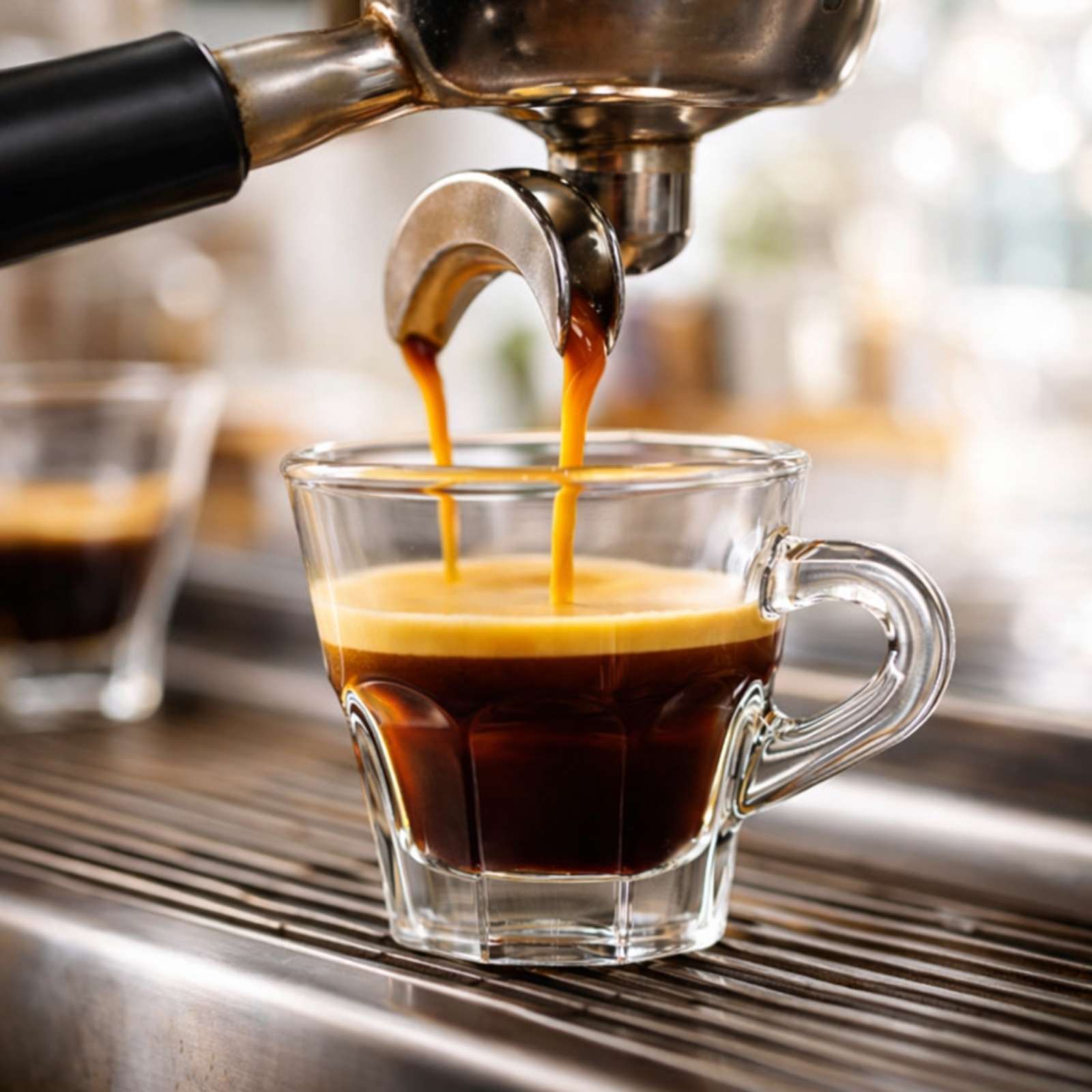
Espresso is a high-pressure brewing method that produces a rich, concentrated coffee with intense flavor and crema. By forcing hot water through finely ground coffee at pressure, espresso extracts a wide range of compounds quickly, creating depth, sweetness, and texture in a small volume.
When dialed in correctly, espresso delivers remarkable balance and complexity. Because extraction happens rapidly under pressure, grind size, dose, and timing are especially critical.
What Makes Espresso Unique
Unlike gravity-based brewing methods, espresso relies on pressure to extract coffee. This means:
- Water is forced through compacted coffee at high pressure
- Extraction happens in seconds rather than minutes
- Oils and dissolved solids create crema and body
The result is a concentrated beverage with layered flavor, dense texture, and lingering finish.
Recommended Grind Size
Grind: Fine
A fine grind is essential to create resistance against pressurized water. Grinding too coarse causes water to flow too quickly, resulting in weak, sour shots. Grinding too fine slows flow excessively and leads to bitterness.
Consistency is critical. Even small grind adjustments can dramatically change shot time and flavor.
Coffee-to-Water Ratio (Double Shot Reference)
This guide uses a standard double shot as the reference.
- Coffee: 18–20 g
- Yield: 36–40 g liquid espresso
- Ratio: Approximately 1:2
Lower ratios increase intensity and body. Higher ratios emphasize clarity and brightness.
How to Brew
- Preheat the espresso machine, portafilter, and cup.
- Grind 18–20 g of coffee finely and dose into the portafilter.
- Distribute the grounds evenly and tamp firmly and level.
- Lock the portafilter into the group head.
- Brew at 200°F (93°C) with 9 bars of pressure.
- Aim for a 25–30 second extraction yielding 36–40 g of espresso.
- Stop the shot once the target yield is reached.
A consistent dose, distribution, and tamp are essential for even extraction.
Brew Time and Temperature
- Water temperature: 195–205°F (90–96°C)
- Brew time: 25–30 seconds
Shorter shot times often indicate under-extraction. Longer times typically signal over-extraction.
Scaling the Recipe
Espresso scales by adjusting dose and yield while maintaining the same ratio.
- 20 g dose → 40 g yield
- 18 g dose → 36 g yield
Avoid changing multiple variables at once when dialing in.
Common Mistakes to Avoid
- Grinding too coarse, causing fast, sour shots
- Grinding too fine, choking the machine
- Uneven distribution or tamping
- Using stale coffee lacking proper degassing
Small adjustments produce large changes in flavor.
How to Adjust Flavor
If the espresso tastes sour or thin:
- Grind finer
- Increase dose slightly
- Extend brew time
If the espresso tastes bitter or harsh:
- Grind coarser
- Reduce brew time
- Lower brew temperature slightly
Always adjust one variable at a time.
Taste Profile
A well-pulled espresso shot is:
- Intense and concentrated
- Sweet with balanced acidity
- Syrupy with rich body
- Layered with lingering finish
It highlights chocolate, caramel, fruit, and aromatic complexity.
The Bottom Line
Espresso is demanding but rewarding. By controlling grind size, dose, pressure, and timing, it delivers a powerful yet balanced expression of coffee in a concentrated form.
Mastering espresso is about precision, consistency, and careful adjustment—not force.
If you’re drawn to concentrated coffee with rich intensity but without an espresso machine, the Moka Pot brewing method is a classic alternative.