Understanding Coffee Roast Development: From Green Coffee to the Finished Roast
Exceptional coffee is not defined by roast level alone.
It is defined by how precisely the coffee is developed through each stage of the roast.
Roast development is a controlled chemical and physical transformation. Every phase influences aroma, sweetness, acidity, body, and clarity. When handled correctly, the coffee expresses its origin. When mishandled, those characteristics are lost—regardless of how good the green coffee was to begin with.
Below is a breakdown of the primary stages of coffee roasting, and why precision at each step matters.
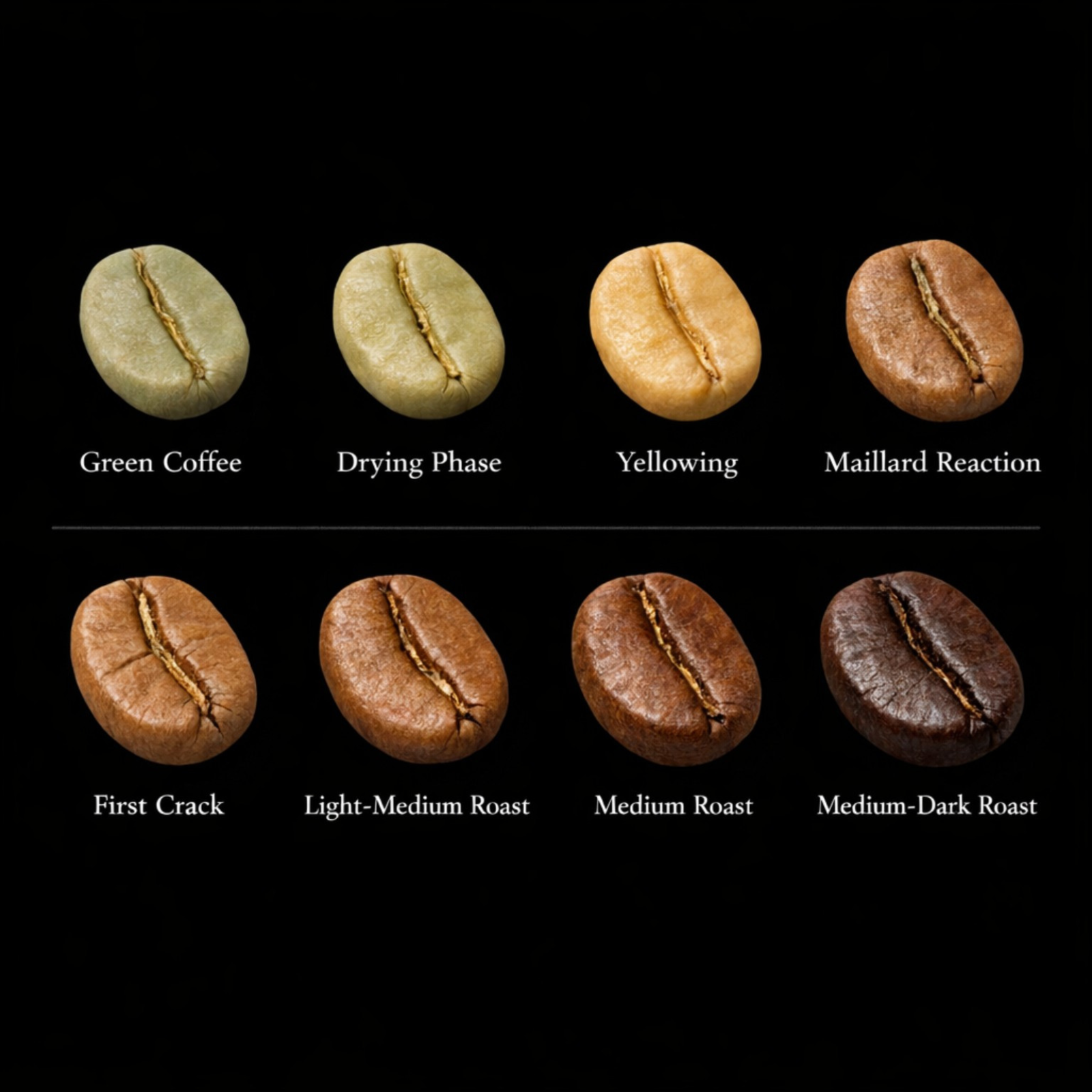
Green Coffee
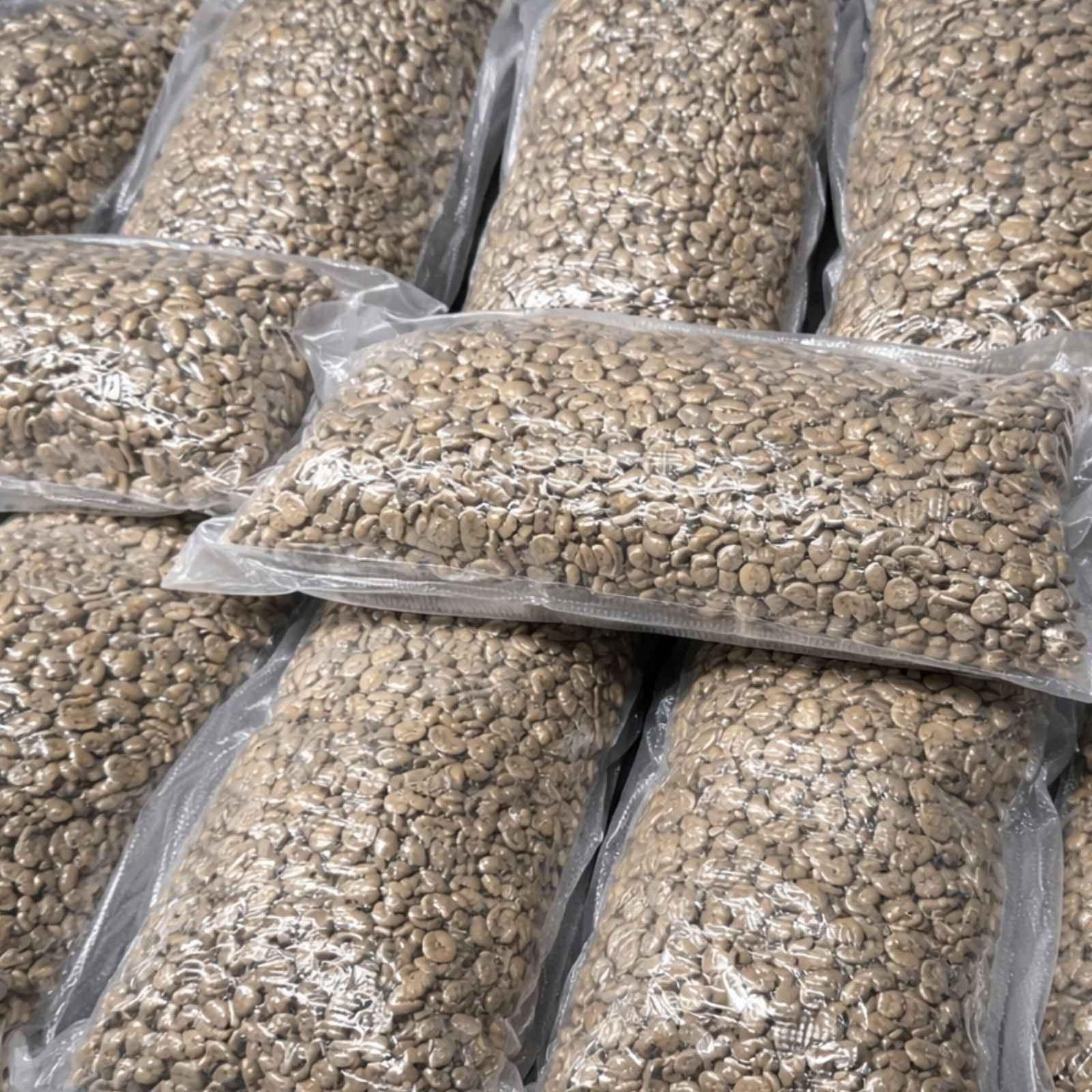
Green coffee is raw, dried coffee seed. At this stage, the bean contains approximately 10–12% moisture and a dense cellular structure composed of sugars, amino acids, organic acids, and chlorogenic compounds.
There is no roast-derived aroma or flavor yet. All potential exists, but none of it is accessible. Roasting does not create quality—it reveals it.
This is why exceptional roasting begins with defect-free green coffee and disciplined sorting before heat is ever applied.
Drying Phase
The drying phase occurs from charge temperature up to approximately 300–320°F (150–160°C).
During this stage:
- Free moisture evaporates from the bean
- Color shifts from green to pale yellow
- Internal pressure begins to build
Yellowing
As moisture exits the bean, color deepens to yellow and aromas shift from grassy to hay-like and lightly toasted.
This phase marks the transition from physical change to chemical reaction. Sugars become more reactive, and internal energy continues to build. Decisions made here determine how evenly the coffee will develop in later stages.
Maillard Reaction
The Maillard reaction typically begins around 320–350°F (160–175°C) and continues until first crack.
This is where complexity is built.
During this phase:
- Amino acids react with reducing sugars
- Browning intensifies
- Sweetness, body, and aromatic depth develop
Compounds formed here are responsible for flavors such as caramel, toasted sugar, nut, chocolate, and malt.
Too little Maillard development produces sharp, underdeveloped cups.
Too much leads to flat, muddy, or overly roasted flavors.
Balance during this phase is critical.
First Crack
First crack occurs when internal pressure fractures the bean’s cellular structure, typically between 385–401°F (196–205°C).
At this point:
- Coffee becomes technically “roasted”
- Steam and gases rapidly escape
- Bean volume expands
- Acidity becomes more defined
First crack is not a finish line—it is a decision point. What happens after first crack determines whether a coffee remains vibrant and expressive or becomes heavy and muted.
Light-Medium Roast Development
Immediately following first crack, development time becomes the most critical variable.
In this range:
- Acidity is preserved
- Sweetness is refined
- Origin character remains dominant
- Structure becomes balanced
For high-scoring specialty coffees, this stage often represents peak clarity. The goal is development without degradation.
Medium Roast Development

As development continues:
- Sugars caramelize further
- Body increases
- Acidity softens
- Roast character begins to share space with origin character
Medium roasts demand restraint. Pushing too far masks nuance; stopping too early leaves the cup unfinished.
Medium-Dark Roast Development
At deeper levels of development:
- Oils migrate toward the surface
- Bittersweet compounds increase
- Origin character diminishes
- Roast flavor becomes dominant
This stage is unforgiving. Small timing errors result in dramatic sensory consequences. Precision here is non-negotiable.
Why Roast Development Matters
Roast development is not about chasing light or dark. It is about timing, temperature control, airflow, and restraint.
Two coffees roasted to the same final temperature can taste entirely different depending on:
- Phase ratios
- Rate of rise
- Development time after first crack
- Bean density and moisture
- Roast environment
This is why automated shortcuts fail to produce exceptional coffee consistently.
Approach at Burnett Coffee Roasters
Every coffee roasted is:
- Pre-hand-sorted to remove defects
- Micro-roasted in small batches
- Developed intentionally for clarity and balance
- Post-sorted to ensure nothing compromises quality
Over an hour of focused work goes into every bag—not because it is efficient, but because it is necessary.
Great coffee is not accidental.
It is developed.
Roast development depends on green coffee structure, and determines final roast level classification and flavor balance.