Why Green Coffee Storage Matters More Than People Think
When people talk about coffee quality, the focus is usually on origin, processing, or roast level. Far less attention is given to what happens after green coffee leaves the farm and before it ever reaches a roaster. Yet green coffee storage is one of the most critical—and least discussed—factors in preserving flavor potential.
Green coffee is not inert. It is a living agricultural product that continues to change over time. How it is stored directly affects how it roasts, how it extracts, and ultimately how it tastes in the cup.
Green Coffee Is Chemically Active
Even after drying, green coffee remains hygroscopic, meaning it readily absorbs and releases moisture from its environment. It is also sensitive to oxygen, heat, light, and odor.
Improper storage accelerates:
- Oxidation
- Moisture gain or loss
- Staling of aromatic compounds
- Loss of acidity and sweetness
Once these changes occur, they cannot be reversed through roasting.
Oxygen: The Silent Degrader
Oxygen exposure is one of the fastest ways to degrade green coffee quality. Over time, oxygen reacts with lipids and organic compounds inside the bean, flattening flavor and dulling aromatics.
High-scoring coffees are especially vulnerable because their defining characteristics—clarity, sweetness, and complexity—are the first to fade.
Minimizing oxygen exposure is essential for maintaining freshness and roast consistency.
Moisture Stability Is Critical
Green coffee performs best when its moisture content remains stable, typically around 10–12%. Fluctuations outside this range lead to:
- Uneven roasting
- Baked or muted flavors
- Structural stress within the bean
Poor storage environments with uncontrolled humidity cause beans to absorb or lose moisture, compromising their behavior during roasting and extraction.
Heat and Light Accelerate Aging
Heat speeds up chemical reactions inside green coffee, accelerating degradation. Light exposure—especially over long periods—can further destabilize delicate compounds.
Storage environments should remain:
- Cool
- Dark
- Consistent
Even moderate temperature swings can shorten the usable lifespan of green coffee.
Odor Absorption Is Often Overlooked
Green coffee readily absorbs surrounding odors. Storage near spices, fuels, cleaning agents, or strong-smelling materials can permanently taint the coffee.
Once absorbed, these odors survive roasting and appear unmistakably in the cup.
Industry Reality vs Best Practice
In much of the industry, green coffee is stored:
- In large bags or sacks
- In shared warehouses
- With variable exposure to air and humidity
While this may be adequate for commodity-grade coffee, it is not sufficient for preserving high-scoring specialty lots, where margins for flavor loss are small.
Why Pre-portioned and Vacuum-Sealed Storage Matters
At the highest quality levels, green coffee storage must go beyond standard warehousing practices.
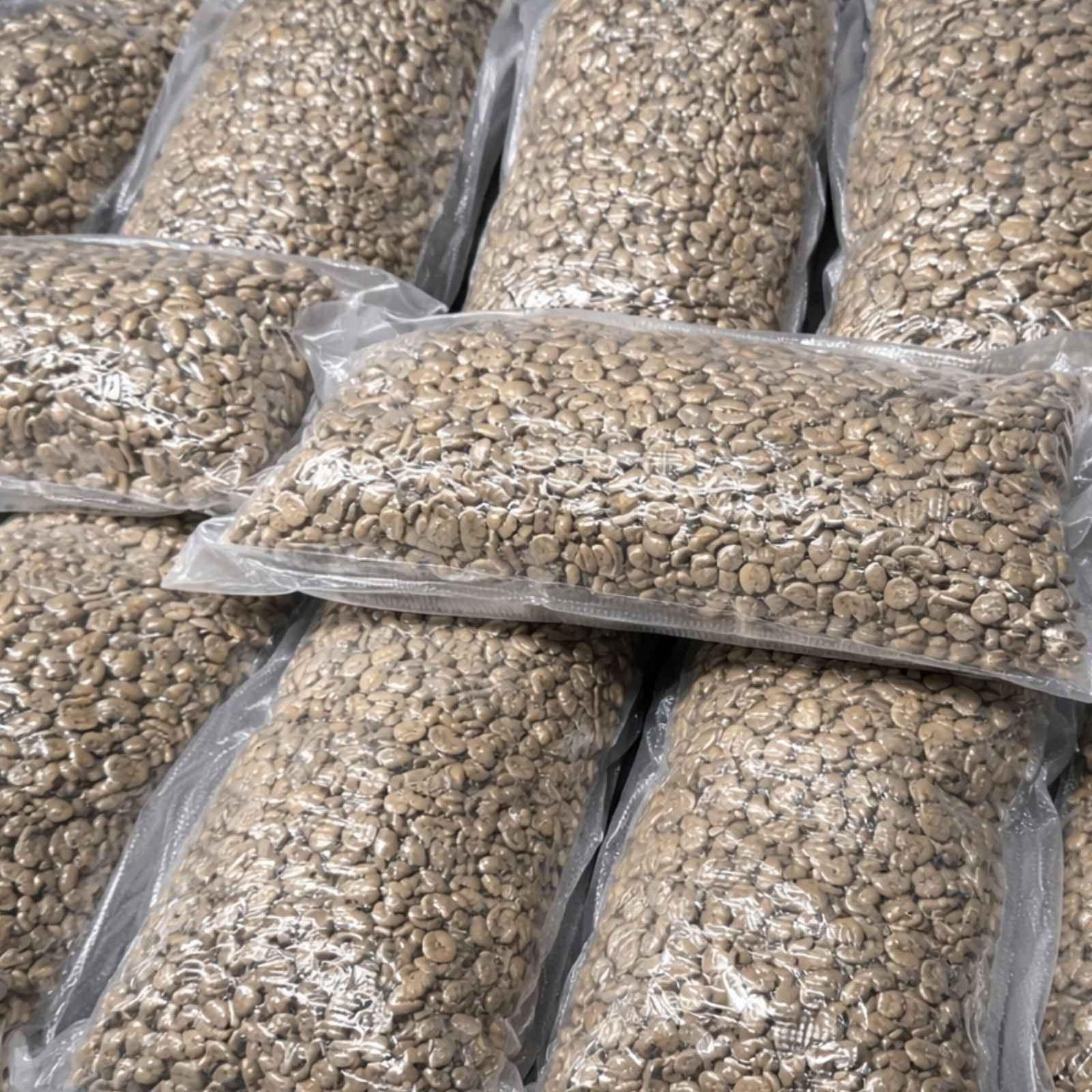
Upon arrival, all green coffee sourced by Burnett Coffee Roasters is meticulously portioned, weighed per bag, and double vacuum sealed before storage.
This approach:
- Minimizes oxygen exposure
- Locks in stable moisture levels
- Protects against environmental odors
- Preserves consistency across roasts
- Extends the usable life of high-scoring coffees
By isolating each portion, degradation is prevented before it can begin, rather than managed after the fact.
Exceeding Industry Standards to Protect Quality
Double vacuum sealing green coffee is not common practice in the specialty industry. It requires additional labor, precision, and planning—but the benefits are measurable.
For coffees scoring in the upper ranges, even small losses in freshness can erase the qualities that made them exceptional. Protecting those attributes demands storage practices that exceed industry norms.
Quality does not stop at sourcing. It must be preserved at every step.
The Bottom Line
Green coffee storage is not a passive step—it is an active form of quality control. Oxygen, moisture, heat, light, and odor all shape how coffee performs long before it reaches the roaster.
For high-scoring coffees, meticulous storage is not optional. It is essential.
Protecting quality before roasting ensures that what was achieved at the farm survives all the way to the cup.
How coffee is stored matters because of the internal structure of the coffee bean and how it reacts to environmental exposure like oxygen, light, heat, and moisture.