How Oxygen, Light, Heat, and Moisture Ruin Coffee Flavor
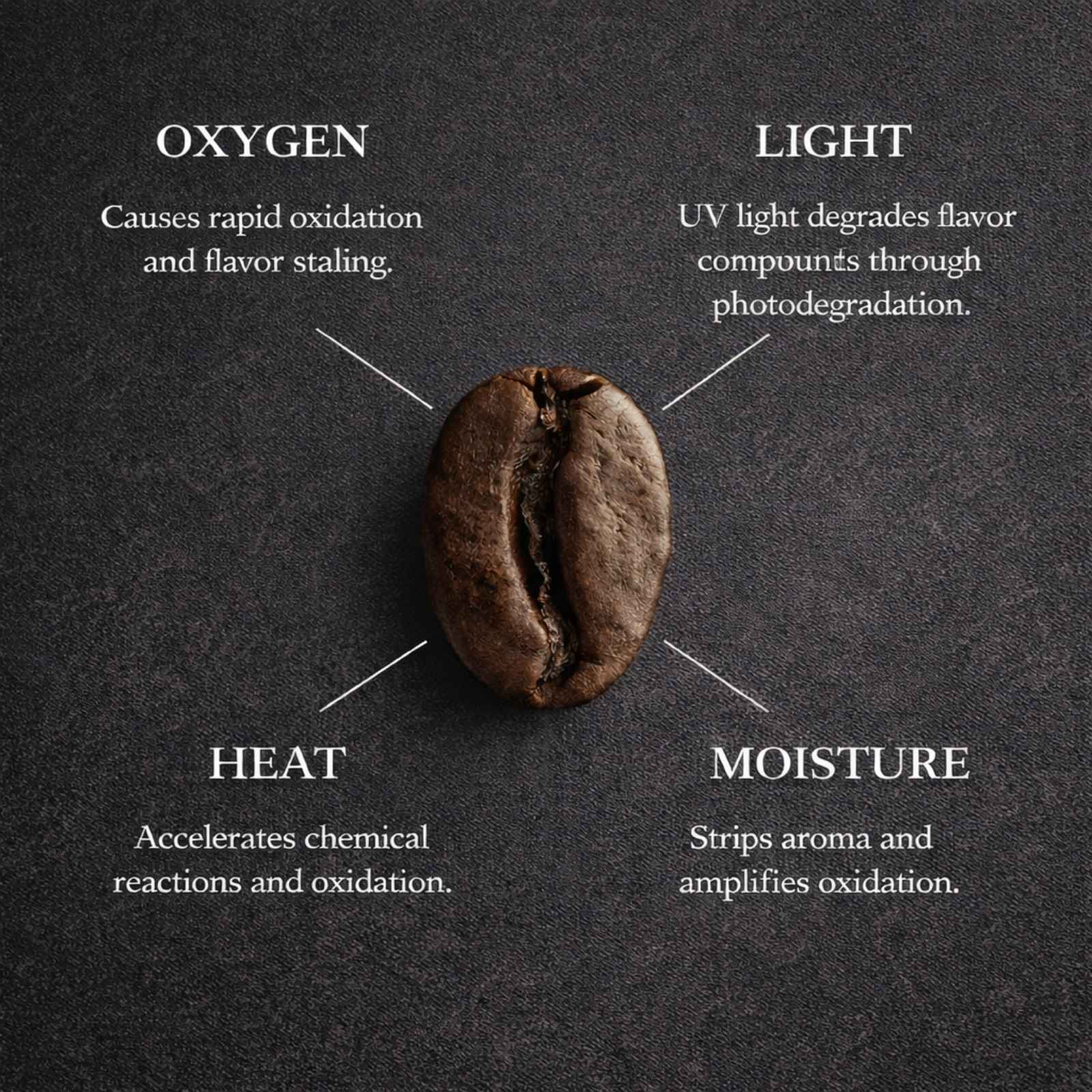
Coffee flavor is fragile. Long before brewing mistakes or grind size come into play, coffee can lose quality simply through exposure to its environment. Four elements are responsible for the majority of flavor degradation in both green and roasted coffee: oxygen, light, heat, and moisture.
These factors do not ruin coffee instantly. Instead, they trigger gradual chemical and structural changes that dull aroma, flatten sweetness, and reduce clarity—often without obvious warning.
Coffee Is Chemically Active
Coffee is not shelf-stable in the way packaged foods are. Both green and roasted coffee contain:
- Lipids
- Organic acids
- Aromatic compounds
- Volatile gases
These compounds continuously interact with their environment. Once they degrade, they cannot be restored by roasting or brewing.
Oxygen: The Primary Cause of Staling
Oxidation and Flavor Loss
Oxygen reacts with coffee’s lipids and aromatic compounds through oxidation. This process:
- Dulls aroma
- Reduces sweetness
- Flattens acidity
- Introduces papery or stale notes
Roasted coffee is especially vulnerable because roasting breaks down cellular structure, making flavor compounds more accessible to oxygen.
Why Oxygen Exposure Happens So Easily
Oxygen exposure increases through:
- Loose storage containers
- Poorly sealed bags
- Repeated opening and closing
- Long-term storage without protection
Even small amounts of oxygen over time can significantly degrade flavor.
Light: A Slow but Persistent Threat
Photodegradation
Light—particularly UV light—causes photochemical reactions that break down coffee’s aromatic and flavor compounds.
This leads to:
- Loss of aromatic complexity
- Faded brightness
- Muted flavor definition
Clear or translucent containers accelerate this process by allowing continuous light exposure.
Why Light Damage Often Goes Unnoticed
Light damage does not usually create harsh or unpleasant flavors. Instead, it quietly removes nuance. Coffee may still taste acceptable, but vibrancy, clarity, and complexity disappear first.
Heat: The Accelerator
Temperature and Chemical Reaction Speed
Heat increases the rate of chemical reactions. In coffee, this results in:
Faster oxidation
Faster aroma loss
Faster staling
Even moderate warmth significantly shortens coffee’s flavor lifespan.
Temperature Fluctuations Matter
Repeated warming and cooling cycles are especially damaging. They:
- Stress the bean structure
- Drive internal moisture movement
- Increase oxygen interaction
Storage near ovens, direct sunlight, or warm equipment accelerates degradation.
Moisture: The Overlooked Destroyer
Moisture is one of the most underestimated threats to coffee quality.
Coffee is hygroscopic, meaning it readily absorbs moisture from its environment. When exposed to humidity or direct moisture, coffee becomes vulnerable to rapid oxidation, flavor flattening, and microbial growth.
In green coffee, excess moisture disrupts cellular structure, accelerates aging, and reduces roast consistency. In roasted coffee, moisture quickly strips aromatic compounds and increases the risk of staling and mold.
Because water carries oxygen, moisture exposure compounds oxidation while destabilizing chemical balance—making it one of the fastest ways to ruin flavor.
Why These Factors Compound Each Other
Oxygen, light, heat, and moisture rarely act independently.
- Heat accelerates oxidation
- Light destabilizes aromatic compounds
- Moisture increases oxygen interaction
- Oxygen reacts with all exposed compounds
Together, they rapidly strip coffee of sweetness, complexity, and balance.
Green Coffee Is Not Immune
While green coffee degrades more slowly than roasted coffee, it is still vulnerable.
Exposure to oxygen, light, heat, and moisture leads to:
- Loss of acidity
- Reduced sweetness potential
- Poorer roasting performance
- Inconsistent extraction
High-scoring coffees are especially sensitive because their defining attributes are subtle and easily lost.
Proper Storage Is Flavor Preservation
Protecting coffee flavor requires:
- Minimizing oxygen exposure
- Blocking light
- Maintaining cool, stable temperatures
- Preventing moisture intrusion
This applies at every stage—from green coffee storage to roasted coffee handling.
Flavor protection is not about extending shelf life. It is about preserving what was already achieved at the farm and during processing.
The Bottom Line
Coffee flavor does not disappear by accident. It degrades predictably when exposed to oxygen, light, heat, and moisture. These elements slowly dismantle the compounds responsible for sweetness, aroma, and clarity—often long before coffee is brewed.
Protecting coffee from these forces is one of the most effective ways to preserve quality, consistency, and true flavor expression.
Flavor loss happens even faster once coffee is ground. Learn why ground coffee loses flavor faster than whole beans, and how green coffee storage helps protect quality long before brewing.