Whole Bean vs Ground Coffee: How Fast Flavor Is Lost
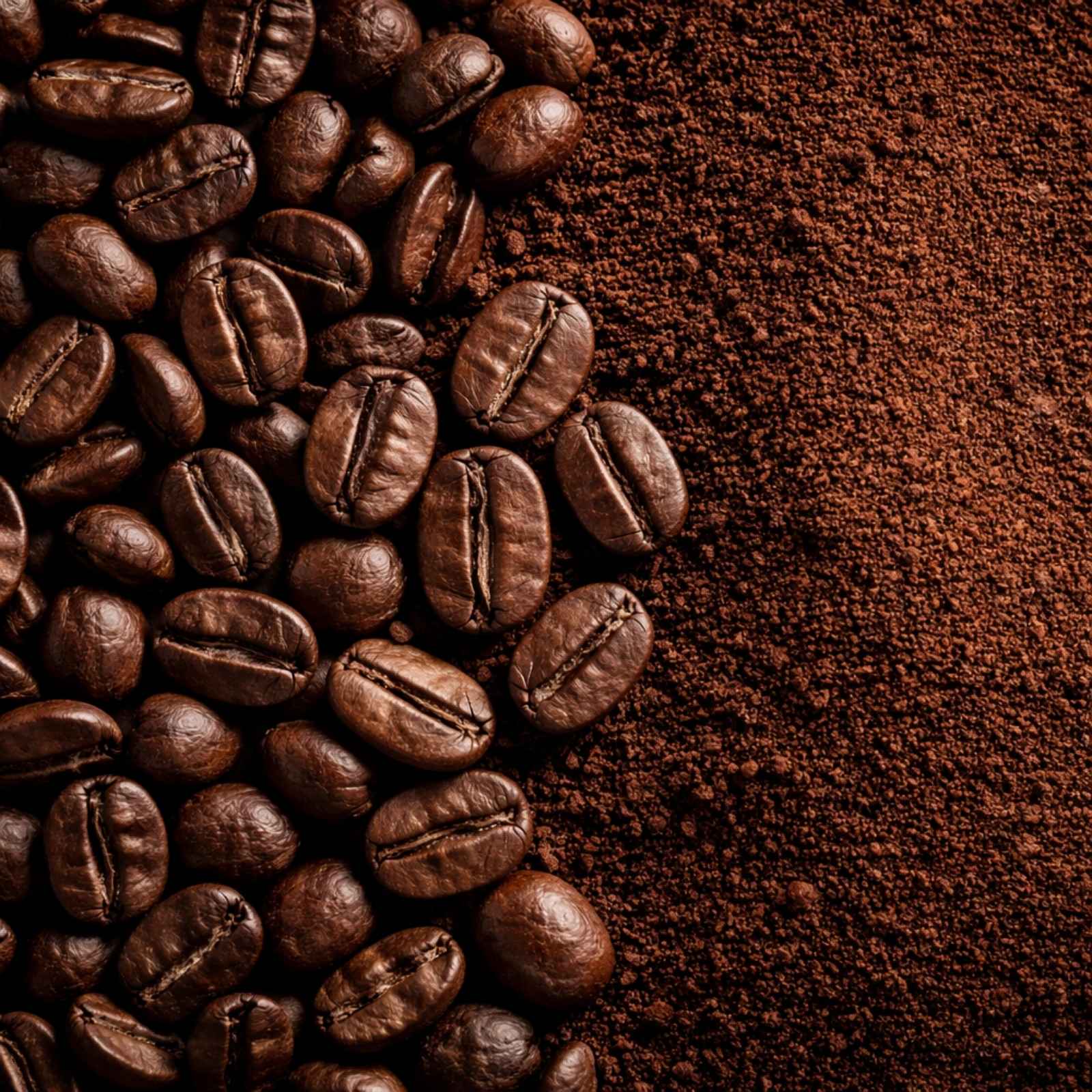
Coffee flavor begins to degrade the moment coffee is roasted. How quickly that degradation happens depends heavily on one factor that is often underestimated: surface area. This is where the difference between whole bean and ground coffee becomes critical.
Grinding coffee dramatically accelerates flavor loss. While whole beans slowly stale over time, ground coffee can lose much of its aroma and clarity within minutes.
Coffee Flavor Is Built on Volatile Compounds
Roasted coffee contains hundreds of volatile aromatic compounds responsible for:
- Aroma
- Sweetness perception
- Flavor complexity
These compounds are fragile. They readily escape into the air or react with oxygen once exposed. The rate at which this happens depends on how much of the coffee’s internal structure is exposed.
Why Whole Beans Retain Flavor Longer
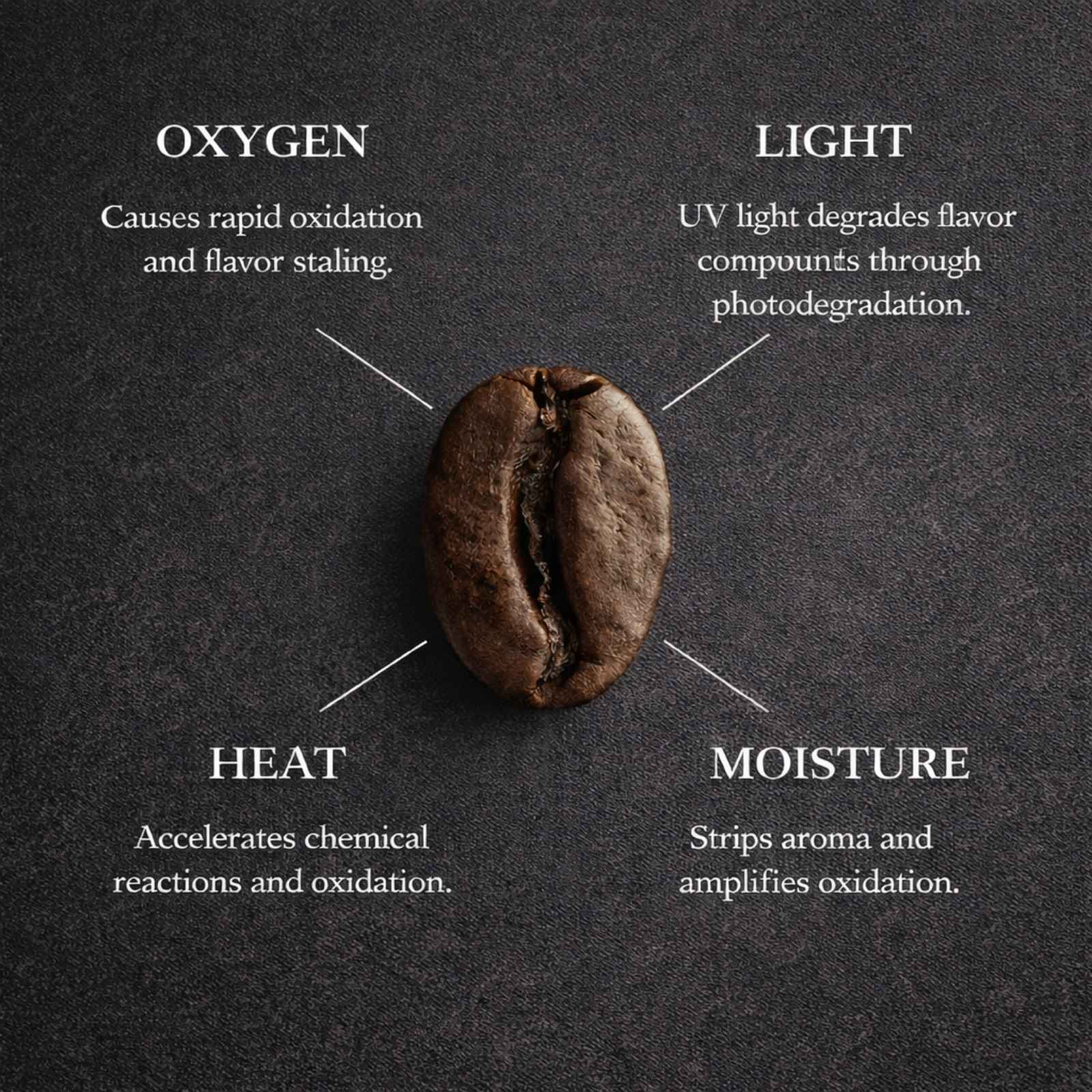
Whole coffee beans act as a natural protective shell. The interior compounds are largely shielded from oxygen, light, and moisture.
In whole bean form:
- Oxidation occurs slowly
- Aromatics remain trapped longer
- Flavor degradation is gradual and predictable
This is why properly stored whole beans can retain acceptable flavor for weeks after roasting.
What Happens the Moment Coffee Is Ground
Grinding coffee shatters the bean’s cellular structure, exposing a massive increase in surface area.
This immediately:
- Releases aromatic gases
- Accelerates oxidation
- Allows moisture interaction
- Speeds up staling
Within minutes, the most delicate aromas begin to disappear. Within hours, noticeable flavor flattening occurs.
How Fast Flavor Is Lost After Grinding
While exact timing varies by roast level and storage conditions, general trends are consistent:
- Within minutes: Aromatics begin dissipating
- Within 15–30 minutes: Noticeable aroma loss
- Within a few hours: Flattened sweetness and reduced clarity
- Within a day: Significant staling and dullness
Grinding coffee far in advance permanently sacrifices complexity, regardless of brew method.
Oxygen Exposure Multiplies the Effect
Ground coffee oxidizes exponentially faster than whole beans because oxygen can reach every exposed particle.
Each grind size still follows the same rule:
- Finer grinds stale faster than coarse grinds
- More surface area equals faster degradation
No container or storage method fully reverses this once grinding has occurred.
Moisture and Odor Absorption
Ground coffee is highly hygroscopic. It absorbs:
- Moisture from the air
- Odors from surrounding environments
These absorbed elements further dull flavor and introduce off-notes that survive brewing.
Why Pre-Ground Coffee Can Never Taste the Same
Pre-ground coffee is not inherently low quality—but it is already compromised by the time it reaches the brewer.
Even when sealed, ground coffee:
- Loses volatile aromatics during packaging
- Continues oxidizing after opening
- Cannot recover lost compounds
This is why freshly ground coffee consistently produces more aromatic, expressive cups.
When Grinding in Advance Is Acceptable
There are practical exceptions:
- Travel
- Camping
- Batch brewing with time constraints
In these cases, grinding as close to brewing as possible still minimizes loss. However, the tradeoff in flavor should be understood.
The Bottom Line
Whole bean coffee preserves flavor by protecting volatile compounds inside the bean. Grinding dramatically accelerates oxidation, aroma loss, and staling by exposing a massive increase in surface area.
For maximum sweetness, clarity, and aroma, coffee should always be ground immediately before brewing.
To understand why grinding accelerates flavor loss, explore how oxygen, light, heat, and moisture degrade coffee over time. Proper handling and green coffee storage also play a major role in preserving freshness before roasting.