Blade vs Burr Grinders: Why Consistency Matters More Than Price
Grinding coffee is not a secondary step—it is one of the most important factors affecting flavor, extraction, and consistency. Before water temperature, brew method, or even roast level comes into play, grind quality determines how evenly coffee extracts.
When comparing blade grinders and burr grinders, the difference isn’t about brand prestige or price. It’s about particle consistency—and how uneven grinding directly harms flavor.
Why Grind Consistency Matters
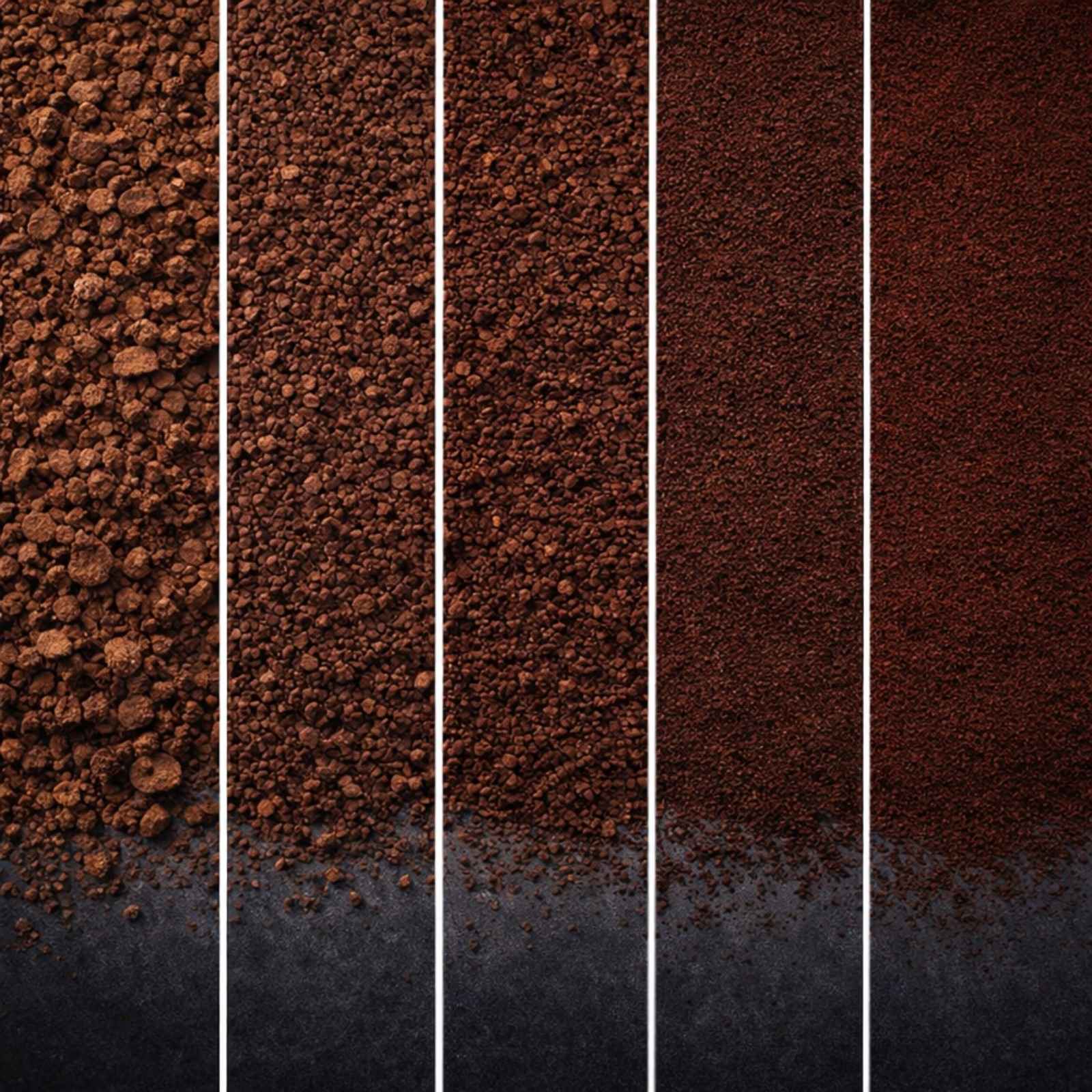
Coffee extraction depends on surface area. When coffee grounds are uniform in size, water extracts flavors evenly. When grind size varies, extraction becomes uneven:
- Smaller particles over-extract, producing bitterness and harshness
- Larger particles under-extract, creating sour, hollow flavors
This imbalance happens during brewing, not tasting. Once extracted incorrectly, flavor cannot be fixed.
Consistent grind size is the foundation of clarity, sweetness, and balance.
How Blade Grinders Work
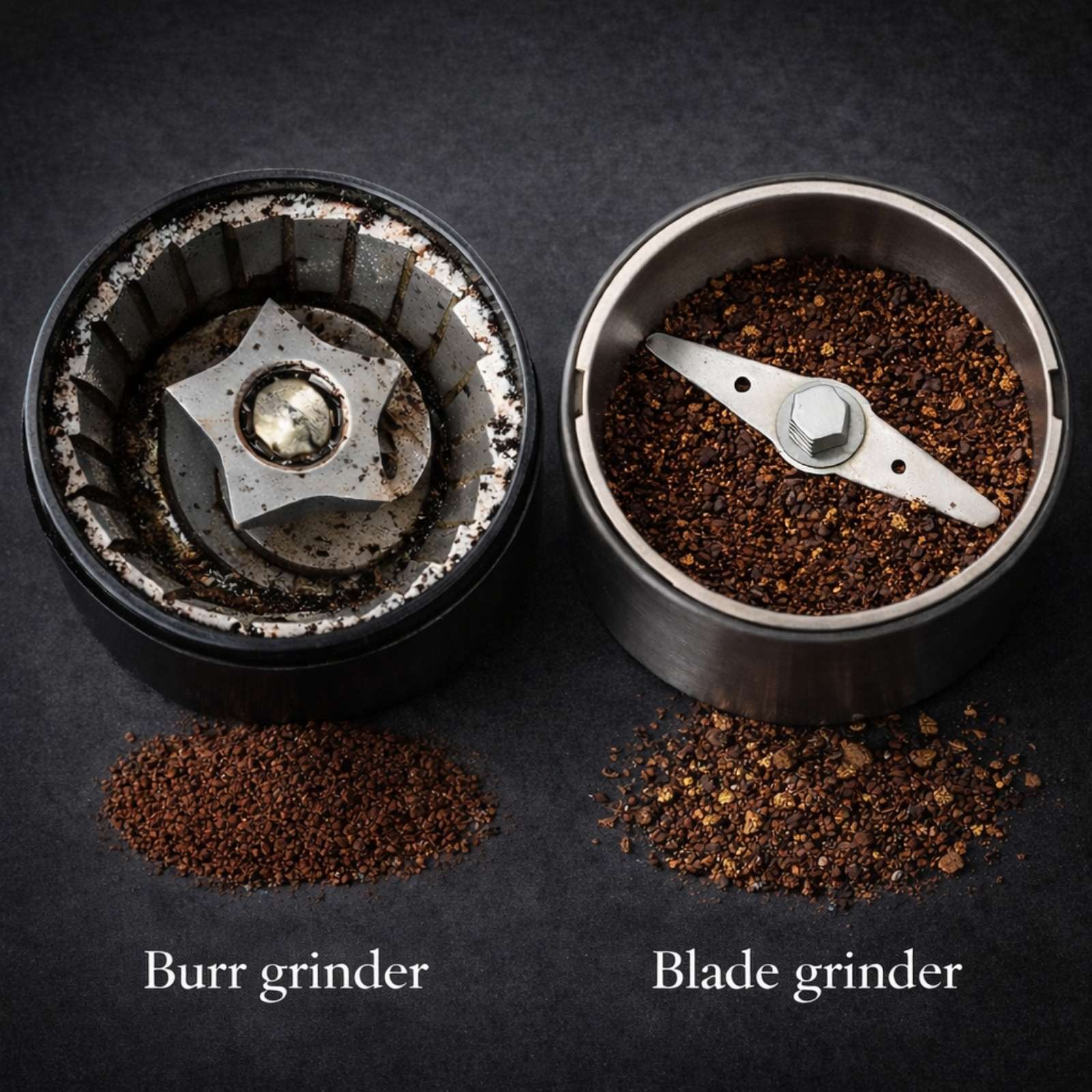
Blade grinders use a spinning metal blade to chop coffee beans randomly. There is no grind setting or size control—only time.
This results in:
- A mix of fine powder and large chunks
- Inconsistent extraction during brewing
- Increased bitterness and muted sweetness
Shaking or pulsing a blade grinder does not solve this problem. The blade continues to create uneven particle sizes regardless of technique.
Blade grinders are inexpensive and compact, but they trade consistency for convenience.
How Burr Grinders Work
Burr grinders crush coffee beans between two precisely machined surfaces (burrs). Beans are ground to a uniform size based on a selected setting.
This produces:
- Even particle distribution
- Predictable extraction
- Cleaner, sweeter cups
Because burr grinders control grind size mechanically, they allow coffee to be matched accurately to brewing methods—whether espresso, pour-over, or immersion.
Why Burr Grinders Produce Better Coffee
The difference in the cup is immediate and measurable:
- More sweetness from even extraction
- Less bitterness from reduced fines
- Greater clarity in flavor separation
- Improved consistency from brew to brew
A modest burr grinder paired with fresh coffee will outperform expensive beans ground unevenly.
Price Is Secondary to Function
Many assume burr grinders are expensive by default. While premium models exist, entry-level burr grinders dramatically outperform blade grinders at similar price points over time.
What matters is not cost, but mechanical control of grind size.
A consistent grind protects the flavor work done at the farm, during processing, and in roasting. An inconsistent grind erases it.
When a Blade Grinder Might Be Acceptable
Blade grinders may be usable in limited situations:
- Coarse, immersion brewing where precision is less critical
- Temporary use while upgrading equipment
Even then, results will remain inconsistent compared to burr grinding.
For anyone focused on flavor accuracy, blade grinders are a compromise—not a solution.
The Bottom Line
Grind consistency matters more than price, brand, or appearance. Blade grinders create uneven particle sizes that lead to bitterness, sourness, and lost sweetness. Burr grinders provide controlled, uniform grinding that allows coffee to extract evenly and express its true character.
If one upgrade makes the biggest impact on coffee quality, it is moving from a blade grinder to a burr grinder.
Grinder consistency directly affects extraction and flavor balance. Learn why grind size matters more than the brewing method when brewing coffee.
Uneven grinding often leads to both bitterness and sourness, explained in under-extracted and over-extracted coffee.